Questão 26 — Our planet is home to subterranean lava deposits and smatterings of obsidian—black volcanic glass. Scalding groundwater bubbles to the surface in pla…
FUVEST 2026 Questão 26
Média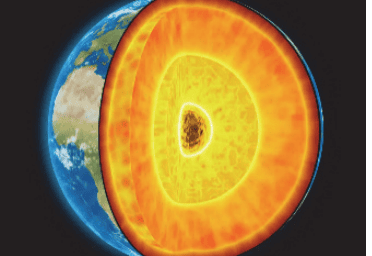
Our planet is home to subterranean lava deposits and smatterings of obsidian—black volcanic glass. Scalding groundwater bubbles to the surface in places. In such a landscape, you remember that the planet’s hard exterior is so thin that we call it a crust. Its superheated interior burns with an estimated forty-four trillion watts of power. Heat mined from underground is called geothermal and can be used to produce steam, spin a turbine, and generate electricity. Until recently, humans have tended to harvest small quantities in the rare places where it surfaces, such as hot springs. The biggest drawback is drilling miles through hot rock, safely. If scientists can do that, next-generation geothermal power could supply clean energy for eons. Right now, geothermal energy meets a puny portion of humanity’s electricity and heating needs. Fossil fuels power about eighty per cent of human activity, pumping out carbon dioxide and short-circuiting our climate to catastrophic effect. Converts argue that geothermal checks three key boxes: it is carbon-free, available everywhere, and effectively unlimited. It is also baseload, which means that, unlike solar panels or wind, it provides a steady flow of energy. “Over the last two years, I have watched this exponential spinup of activity in geothermal,” a drilling expert said. But there is a risk of moon shots: often, they miss. “There’s basically zero chance that you’re going to develop a moon-shot technology and have it be commercial in five years, on a large-scale”, said Mark Jacobson, an engineering professor. That’s how long humanity has to lower emissions before climatic devastation. “There’s a very decent chance you can do that with wind and solar,” he said. Perhaps, when resources and time are finite, trying and failing could be worse than not trying at all.
New Yorker. March 2025. Adaptado.
De acordo com o texto, atualmente a exploração do calor gerado nas regiões subterrâneas do planeta
Resolução
Resposta correta: Letra A — atende a uma parcela insignificante da demanda energética da sociedade.
Flashcards
Perguntas pontuais sobre o tema desta questão. Toque no card para virar e use as setas para navegar.
- 1. O que é energia geotérmica?
- Energia geotérmica é a energia obtida a partir do calor armazenado no interior da Terra, especialmente em regiões com atividade vulcânica ou fontes termais.
- 2. Por que a energia geotérmica é considerada uma fonte de energia limpa?
- Porque sua produção não emite dióxido de carbono (CO2) ou outros poluentes atmosféricos, contribuindo para a redução do efeito estufa.
- 3. O que significa energia de base (baseload)?
- Energia de base é aquela capaz de fornecer eletricidade de forma contínua e estável, independentemente de condições climáticas, como faz a energia geotérmica.
- 4. Qual é o principal desafio tecnológico para expandir a energia geotérmica?
- O principal desafio é perfurar quilômetros de rocha quente de forma segura e econômica para acessar o calor subterrâneo.
- 5. Como a energia geotérmica é convertida em eletricidade?
- O calor subterrâneo é usado para aquecer água, gerando vapor que movimenta turbinas acopladas a geradores elétricos.
- 6. Por que a participação da energia geotérmica na matriz energética mundial ainda é pequena?
- Devido à limitação tecnológica e ao alto custo de perfuração, além de sua exploração estar restrita a regiões específicas.
- 7. Quais são as principais vantagens da energia geotérmica em relação a fontes fósseis?
- Ela é renovável, praticamente ilimitada, disponível em todo o planeta e não emite gases de efeito estufa.
Treino guiado
Detonando o Tema
Faça uma revisão completa do tema: o DIMVS cria uma sequência guiada com 3 questões complementares, do básico ao difícil, para você detonar o assunto de vez.
Verificando seu acesso ao treino...
Comentários por alternativa