Questão 67 — Researchers investigated the quantities of thousands of muscle proteins and found a possible new explanation for muscle memory. A study showed for th…
FUVEST 2026 Questão 67
Média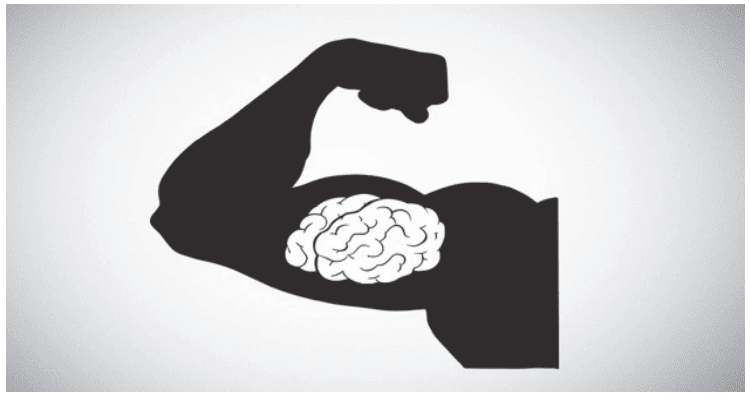
Researchers investigated the quantities of thousands of muscle proteins and found a possible new explanation for muscle memory. A study showed for the first time that muscles "remember" training at the protein level. It is often thought that the effects of exercise are short-lived, and a break from the gym can cause stress over muscle loss. However, the research has shown that this stress is partly unnecessary, as the effects of resistance training persist in muscles for up to two months and the gains are fast when training is started again. But what mechanisms and changes at the cellular and molecular levels explain muscle memory? In the study, ten weeks of resistance training was followed by a break of the same length and then followed by another ten weeks of resistance training. Using the proteomics method, it was possible to study the quantities of over 3,000 muscle proteins using advanced mass spectrometry equipment. The study found two types of change profiles in muscle proteins. Some proteins changed as a result of training, returned to their pre-training state during the break, and changed again during the new training period similarly to the first training period. These included proteins related to aerobic metabolism. Another group of proteins changed as a result of training and remained changed during the break and after the new training period. Among these proteins were several calcium-binding proteins, such as calpain-2, whose gene has recently been identified to retain a memory trace even after a training break. "At the level of the number of muscle nuclei and the memory traces of genes, that is, epigenetics, long-term responses that persist even after a break and possibly explain 'muscle memory' have previously been observed," says a researcher. "Now, for the first time, we have shown that muscles 'remember' previous resistance training at the protein level for at least two and a half months." A espectrometria de massas, utilizada para a identificação das proteínas no estudo apresentado no texto, é uma técnica que permite determinar com precisão a massa molecular de moléculas carregadas. A determinação da massa exata da molécula é feita a partir do conhecimento da sua carga e da razão massa/carga (m/z), parâmetro que influencia no movimento das espécies, permitindo sua determinação. Caso a carga das moléculas seja unitária, a razão m/z é numericamente igual à massa da espécie a ser identificada. Caso a carga seja 2, a razão m/z detectada é metade da massa da molécula. A imagem a seguir representa, na forma de um gráfico, o resultado de uma análise por espectrometria de massas de uma amostra pura contendo apenas uma espécie intacta com fórmula molecular $[\text{C}_{44}\text{H}_{69}\text{NO}_{12}\text{Ca}]^{2+}$ e massa exata, considerando os isótopos mais abundantes, de 843,444 g/mol, detectada como m/z 421,722.
Disponível em https://jyu.fi/en/news/. 14 April 2025. Adaptado.
[img:https://zospydaosoqbdpxgpnni.supabase.co/storage/v1/object/public/images/fuvest/2026/f67.png]A presença de outros sinais além do sinal de m/z 421,722, mesmo em uma amostra pura não contendo nenhuma outra espécie além do $[\text{C}_{44}\text{H}_{69}\text{NO}_{12}\text{Ca}]^{2+}$, deve-se
Resolução
Resposta correta: Letra A — à presença de outros isótopos menos abundantes e mais pesados de átomos presentes na molécula.
Flashcards
Perguntas pontuais sobre o tema desta questão. Toque no card para virar e use as setas para navegar.
- 1. O que é espectrometria de massas?
- É uma técnica analítica que identifica moléculas com base na razão massa/carga (m/z) de íons gerados a partir delas.
- 2. Como a razão m/z é determinada em espectrometria de massas?
- A razão m/z é calculada dividindo a massa do íon pela sua carga elétrica, permitindo distinguir diferentes espécies iônicas.
- 3. O que são isótopos e como afetam espectros de massas?
- Isótopos são átomos do mesmo elemento com diferentes números de nêutrons, o que altera a massa da molécula e resulta em múltiplos picos no espectro.
- 4. Por que uma amostra pura pode apresentar múltiplos picos no espectro de massas?
- Devido à presença natural de isótopos menos abundantes e mais pesados nos elementos constituintes da molécula.
- 5. O que significa um íon com carga 2+ em espectrometria de massas?
- Significa que o íon perdeu dois elétrons, e sua razão m/z será metade da massa molecular.
- 6. Como a abundância isotópica influencia o espectro de massas?
- Isótopos mais abundantes geram picos principais, enquanto menos abundantes criam picos secundários de menor intensidade.
- 7. Qual a diferença entre massa molecular e razão m/z?
- Massa molecular é a soma das massas dos átomos da molécula, enquanto m/z é essa massa dividida pela carga do íon detectado.
Treino guiado
Detonando o Tema
Faça uma revisão completa do tema: o DIMVS cria uma sequência guiada com 3 questões complementares, do básico ao difícil, para você detonar o assunto de vez.
Verificando seu acesso ao treino...
Comentários por alternativa