Questão 68 — Think for a minute about the little bumps on your tongue. You probably saw a diagram of those taste bud arrangements once in a biology textbook — swe…
FUVEST 2026 Questão 68
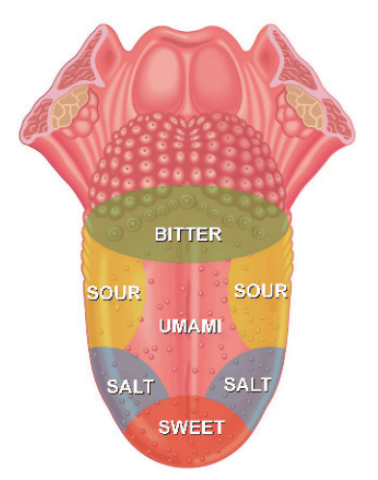
Think for a minute about the little bumps on your tongue. You probably saw a diagram of those taste bud arrangements once in a biology textbook — sweet sensors at the tip, salty on either side, sour behind them, bitter in the back. But the idea that specific tastes are confined to certain areas of the tongue is a myth that “persists in the collective consciousness, despite decades of research debunking it”, according to a review published this month in The New England Journal of Medicine. Also wrong: the notion that taste is limited to the mouth. The old diagram, which has been used in many textbooks over the years, originated in a study published by David Hanig, a German scientist, in 1901. But the scientist was not suggesting that various tastes are segregated on the tongue. He was actually measuring the sensitivity of different areas, said Paul Breslin, a researcher at Monell Chemical Senses Center in Philadelphia. “What he found was that you could detect things at a lower concentration in one part relative to another,” Dr. Breslin said. The tip of the tongue, for example, is dense with sweet sensors but contains the others as well. The map’s mistakes are easy to confirm. If you place a lemon wedge at the tip of your tongue, it will taste sour, and if you put a bit of honey toward the side, it will be sweet. The perception of taste is a remarkably complex process, starting from that first encounter with the tongue. Taste cells have a variety of sensors that signal the brain when they encounter nutrients or toxins. For some tastes, tiny pores in cell membranes let taste chemicals in. Such taste receptors aren’t limited to the tongue; they are also found in the gastrointestinal tract, liver, pancreas, fat cells, brain, muscle cells, thyroid and lungs. We don’t generally think of these organs as tasting anything, but they use the receptors to pick up the presence of various molecules and metabolize them, said Diego Bohórquez, a self-described gut-brain neuroscientist at Duke University. For example, when the gut notices sugar in food, it tells the brain to alert other organs to get ready for digestion.
New York Times. May 29, 2024. Adaptado.
Sobre os receptores gustativos e sua distribuição corporal, o texto sugere que
Resolução
Resposta correta: Letra D — a detecção de sabores envolve rede integrada de órgãos que colaboram com o sistema nervoso.
Flashcards
Perguntas pontuais sobre o tema desta questão. Toque no card para virar e use as setas para navegar.
- 1. O que são receptores gustativos?
- Receptores gustativos são células sensoriais especializadas que detectam moléculas de sabor e enviam sinais ao sistema nervoso.
- 2. Onde, além da língua, podem ser encontrados receptores de sabor?
- Receptores de sabor também estão presentes no trato gastrointestinal, fígado, pâncreas, células de gordura, cérebro, músculos, tireoide e pulmões.
- 3. Qual é o mito sobre a distribuição dos gostos na língua?
- O mito diz que áreas específicas da língua detectam gostos distintos, mas na verdade todos os tipos de sensores estão distribuídos por toda a língua.
- 4. Como os receptores gustativos extraorais contribuem para o organismo?
- Eles detectam moléculas específicas e ajudam a regular funções fisiológicas, como digestão e metabolismo, comunicando-se com o sistema nervoso.
- 5. O que acontece quando o trato gastrointestinal detecta açúcar?
- O trato gastrointestinal sinaliza ao cérebro, que alerta outros órgãos para se prepararem para a digestão do açúcar.
- 6. Por que o mapa tradicional dos gostos na língua é considerado incorreto?
- Porque pesquisas mostram que todos os gostos podem ser detectados em todas as regiões da língua, embora com diferentes sensibilidades.
- 7. Qual é a importância da integração entre órgãos na percepção do sabor?
- A integração permite uma resposta coordenada do organismo, envolvendo múltiplos órgãos e o sistema nervoso para processar e reagir aos sabores.
Treino guiado
Detonando o Tema
Faça uma revisão completa do tema: o DIMVS cria uma sequência guiada com 3 questões complementares, do básico ao difícil, para você detonar o assunto de vez.
Verificando seu acesso ao treino...
Comentários por alternativa